• 01-5454370,01-5455532
  • np-info@mercycorps.org

Strengthening Anticipatory Action in Nepal (SAAN)

About the Program
The Strengthening Anticipatory Action in Nepal (SAAN) project is a two-year initiative running from August 2024 to December 2026, implemented by Mercy Corps Nepal. The project is helping flood and drought vulnerable communities shift away from reactive disaster response toward a proactive, forecast-based Anticipatory Action model- acting ahead of a hazard rather than responding after the damage is done. Working across 5 municipalities in Sudurpaschim and Madhesh provinces, SAAN strengthens early warning systems, builds community preparedness, and integrates anticipatory action into local governance.

SAAN is implemented in partnership with the Nepal National Social Welfare Association (NNSWA) and AASMAN Nepal, with funding support from The Coca-Cola Foundation (TCCF).
Our Approach
SAAN works by strengthening early warning systems, building community preparedness, and integrating anticipatory action directly into local governance. Rather than waiting for a flood or drought to hit and then responding to the damage, the project equips communities and local governments with the tools, information, and systems to act ahead of predicted hazards- protecting lives, livelihoods, and dignity before loss occurs.

Geographic Areas
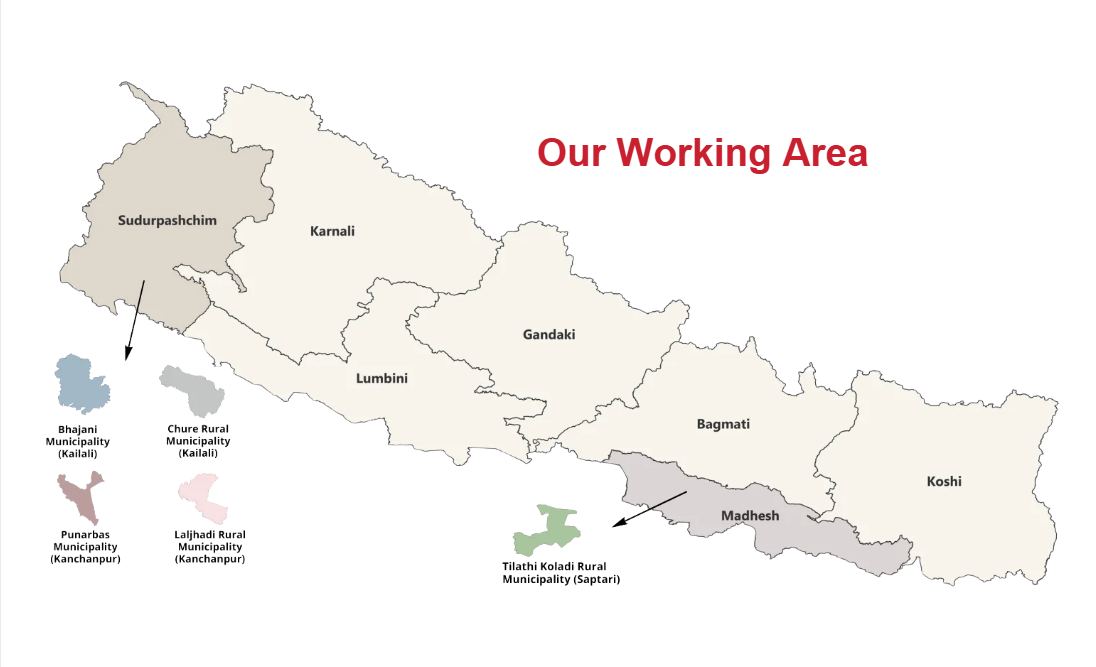
SAAN operates across 5 municipalities in two provinces:

Sudurpaschim Province: Bhajani Municipality, Chure Rural Municipality, Punarbas Municipality, and Laljhadi Rural Municipality

Madhesh Province: Tilathi Koiladi Rural Municipality

Goal
To enable communities to act before disaster strikes, preventing loss and preserving dignity.

Reach and Results

5
Inclusive communication channels developed across all working municipalities- ensuring early warning reaches every household through multiple means, including voice messages in local languages.

2,600m
Riverbank protected through Nature-Based Solutions- preserving 95.4 hectares of land across Bhajani, Punarbas, and Laljhadi municipalities.

5,033 Indirect and 1,307 Direct Households
reached  with continued progress toward full targets of 18,151 households (indirect) and 1,872 households (direct).

Supported By:

TCCF

Implemented in Partnership With:

AASMAN
NNSWA