
• 01-5454370,01-5455532
  • np-info@mercycorps.org

Climate Resilience for Communities in Nepal (CRC)

About the Alliance
The Zurich Climate Resilience Alliance is a collaboration between humanitarian, NGO, research, and private sector partners working to build resilience to climate hazards in rural and urban contexts. Formerly known as the Zurich Flood Resilience Alliance, the Alliance brings over a decade of experience generating evidence on communities’ climate resilience levels and identifying effective solutions. Through long-term community programs, research, and stakeholder engagement, the Alliance strives to deliver systemic change at scale – working toward a world where communities are more resilient to climate hazards and able to thrive.

In Nepal, Mercy Corps and Practical Action are the Alliance partners, with Mercy Corps spearheading influencing efforts both nationally and globally.
About the Program
The Climate Resilience for Communities (CRC) program, implemented by Mercy Corps in Nepal, focuses on enhancing flood and heatwave resilience over a planned 12-year timeframe. The initial cycle (2024–2027) targets 21 communities across 7 municipalities in 2 provinces, aiming to strengthen investments and policies at the local, sub-national, and national levels – alongside community efforts, to better prepare for, respond to, and recover from climate hazards.

The program prioritizes floods and heatwaves due to their rising frequency and severity from climate change. Monsoon-driven flash floods from the Chure and Siwalik mountains often leave little time for preparation, causing extensive damage to homes, livelihoods, and infrastructure. Heatwaves similarly pose serious health risks and threaten food security, especially for agriculture-dependent communities.

Our Approach
CRC works through long-term, flexible, community-centered programming with a focus on capacity-building and systemic change -by delivering programs, conducting evidence-based research, sharing knowledge, and influencing key stakeholders on resilience to floods and heatwaves. We collaborate with local communities, government partners at all levels, and like-minded organizations through capacity building, information sharing, and partnerships to drive impactful change.

Geographic Areas

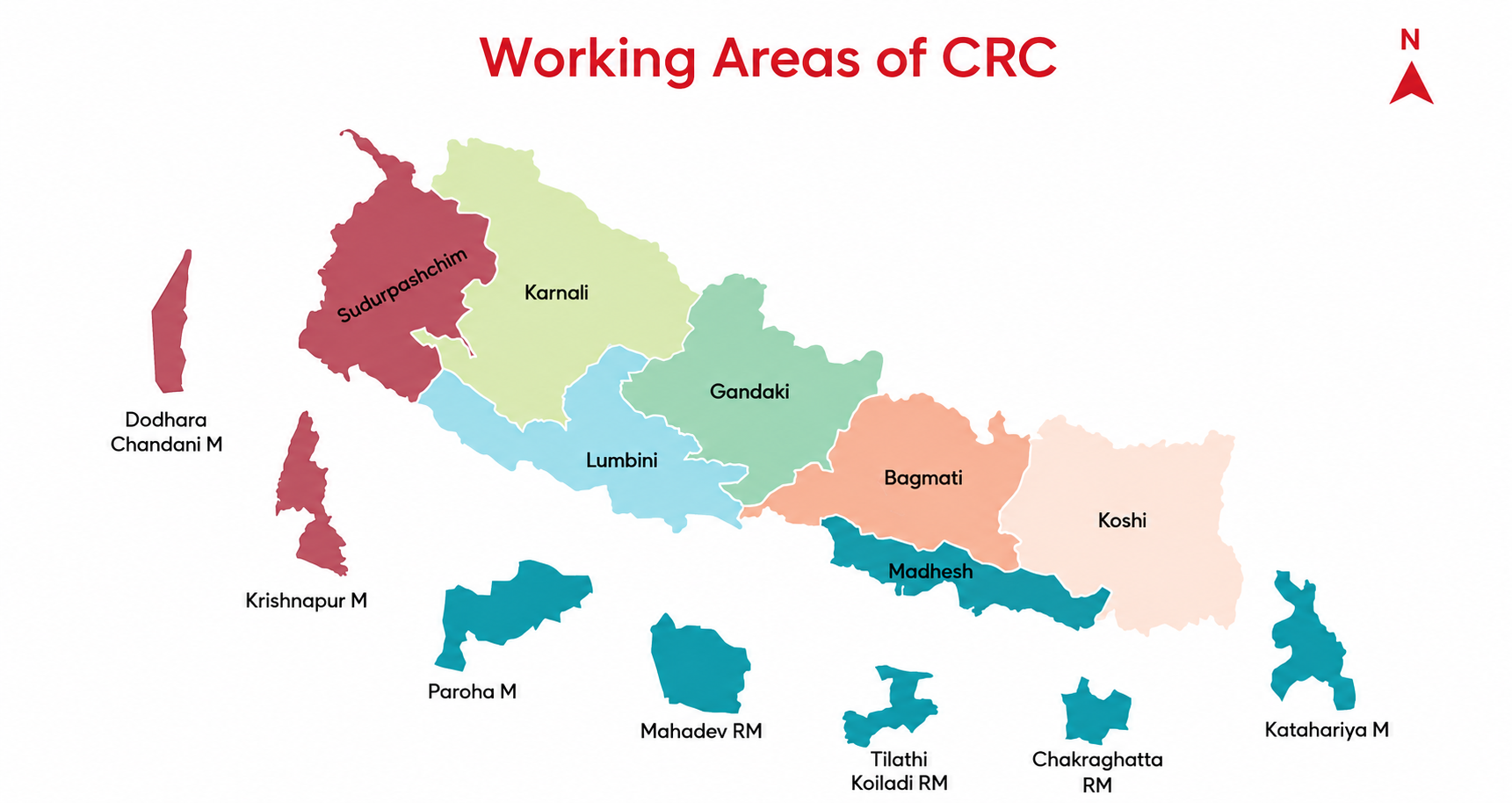
Madhesh Province: 15 communities across 2 municipalities (Paroha, Katahariya) and 3 rural municipalities (Mahadeva, Tilathi Koiladi, Chakraghatta)

Sudurpaschim Province: 6 communities across 2 municipalities (Krishnapur, Dodhara Chandani)

Goal
To improve climate resilience and disaster risk management for floods and heatwaves through scalable, inclusive, and risk-informed decision-making in Nepal.

Reach and Results

32025

People reached

93%

Households aware of climate risks

1079

Families practicing heat & flood adaptation

5

Govts adopting DRR policies

Local governments have made written commitments to allocate at least 5% of the annual budget of key development sectors (such as agriculture, health, and infrastructure) toward disaster risk reduction and climate adaptation, in line with Nepal’s National Disaster Risk Reduction Strategic Action Plan (2018–2030).

By 2027, CRC aims to fully integrate heat and flood preparedness into local policies and development plans, increase government financing for climate resilience, and ensure that all 21 targeted communities have the knowledge and capacity to independently act on climate-induced risks.

In Collaboration with: